Beverage Market Evolution: New Tastes and Growth Projections for 2025
From US$5.2 billion in 2024 to US$5.8 billion by 2026 - strategies for innovative product launches in Vietnam.
INSIGHTS
BDP+Partners
11/30/20254 min read
Established in 2023, BDP+Partners is a forward-thinking consulting firm dedicated to delivering innovative strategies, operational excellence, event management, and sustainable revenue growth for clients across F&B, hospitality, e-commerce, and luxury industries. As Vietnam's beverage sector adapts to shifting consumer demands, BDP+Partners accelerates innovations to help brands capture emerging opportunities. This comprehensive post examines the evolution of Vietnam's beverage market in 2025, highlighting new tastes, growth projections, trends, consumer behaviors, challenges, opportunities, case studies, and strategic insights. Drawing from the latest industry data and reports, we provide actionable recommendations for stakeholders aiming to lead in this vibrant, health-focused landscape.
Market Overview: Steady Growth Amid Economic Shifts
Vietnam's beverage market is demonstrating resilience and adaptability in 2025, evolving from traditional favorites to a diverse array of health-oriented and innovative products. Valued at USD 5.2 billion in 2024, the market is projected to grow to USD 5.8 billion by 2026, achieving a compound annual growth rate (CAGR) of 5.8%. This expansion is part of the broader food and beverage (F&B) sector, which reached USD 124.5 billion in 2024 and is forecasted to hit USD 210.4 billion by 2032 at a 6.81% CAGR. Non-alcoholic beverages dominate, with segments like ready-to-drink (RTD) tea and coffee leading the charge, while functional drinks emerge as a high-growth area.
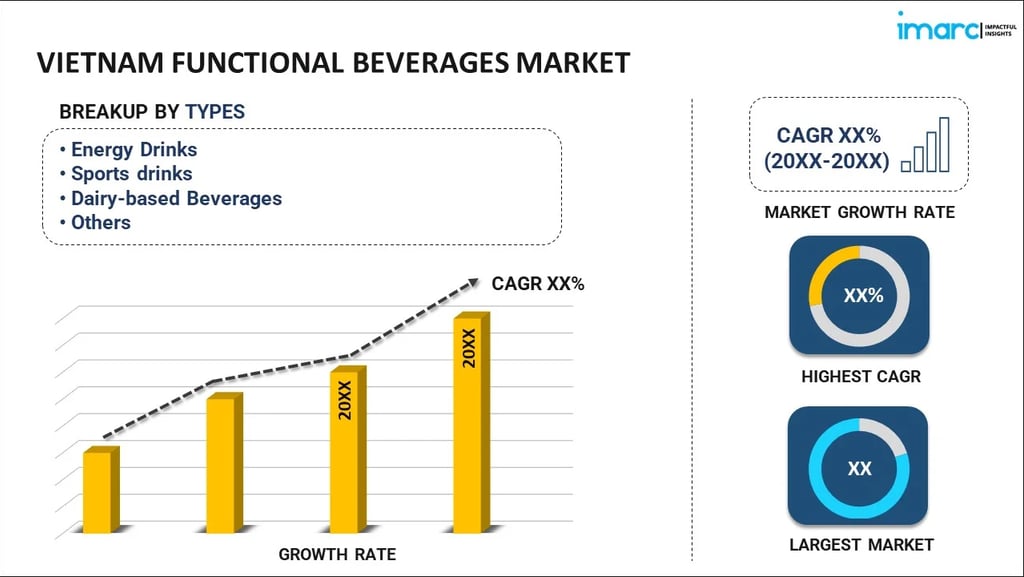
The functional beverages subsector, valued at USD 574.0 million in 2024, is expected to reach USD 958.0 million by 2033, growing at a 5.86% CAGR. This includes energy drinks, sports drinks, and dairy-based options, reflecting a market shift towards products offering health benefits beyond basic hydration. The beer market, a key alcoholic segment, was worth USD 2,745.20 million in 2024 and is projected to grow to USD 3,217.63 million by 2033 at a 1.78% CAGR, influenced by premiumization and craft trends.
Urbanization and rising disposable incomes - Vietnam's middle class is expanding rapidly—fuel this growth, with consumers increasingly seeking convenient, on-the-go options. In H1 2025, exports of beverages like fruit juices and teas saw significant increases, supporting domestic production amid global demand for natural, Asian-inspired flavors. Overall F&B exports grew 13.1% year-over-year, underscoring the sector's international appeal. This overview highlights a market balancing tradition with innovation, poised for sustained expansion through 2030.


Key Trends: Health, Functionality, and Flavor Innovation
The beverage market in 2025 is marked by a surge in health-focused trends, with consumers prioritizing low-sugar, functional, and natural ingredients. Key innovations include hybrid beverages blending fruit juices with probiotics or plant-based proteins, addressing demands for gut health and energy boosts. Functional drinks are experiencing 8% annual growth, enriched with vitamins, minerals, and adaptogens for holistic wellness. Trends like gut-friendly drinks, mental clarity beverages, and simple nutritional claims dominate, with a focus on hydration, adaptogens, protein, and immune support.
New tastes emphasize local flavors—lychee, calamansi, pineapple, and tropical fruits—infused into RTD teas and coffees, which show +18% growth for RTD coffee. Reduced or zero-sugar formulations are in high demand (85% consumer preference), alongside sustainable packaging like PET bottles and cans. AI-driven innovations, such as smart formulation for personalized drinks, are emerging, enhancing product development and consumer engagement. Sports drinks expand beyond athletics (+12% growth), used for daily hydration, while energy drinks like Sting lead with 58% market usage. These trends reflect a market innovating for health-conscious, busy lifestyles.
Consumer Behaviors: Seeking Value, Health, and Convenience
Vietnamese consumers in 2025 are value-driven and selective, with 75% consuming carbonated soft drinks weekly, but shifting towards healthier alternatives like RTD tea (68% weekly, 78% among Gen Z). Preferences include refreshment (32%), energy boosts (24%), and taste enjoyment (18%), with beverages chosen for social occasions (68%), mealtimes (52%), and on-the-go (48%). Health consciousness drives demand for low-sugar (85%), functional benefits (78%), and sustainable options (45%), with 68% interested in local fruit flavors.
Gen Z and millennials lead, favoring innovative, eco-friendly products, while men prefer energy drinks (58% weekly). Multi-pack purchases rose +58%, and online deliveries +24%, indicating convenience priorities. Consumer segments include Value Seekers (32%, price-sensitive), Health-Conscious (28%, avoiding artificials), Functional Benefit Seekers (24%, performance-oriented), and Social Experiencers (16%, premium-focused). This behavior underscores a market where health, affordability, and innovation intersect.
Challenges: Navigating Barriers and Competition
Despite growth, challenges abound. High sugar content (82% concern), expensive pricing (74%), and artificial ingredients (68%) deter consumers, impacting loyalty—lowest in sports drinks at 42%. Supply chain disruptions and rising input costs strain margins, while regulatory pressures for healthier formulations add complexity.
Intense competition from global giants like Coca-Cola and Pepsi, alongside local players, requires differentiation. Economic volatility tempers spending, but agile innovations can mitigate these hurdles.
Opportunities: Capitalizing on Health and Localization
Opportunities are ripe in functional and natural segments, with the market for healthy drinks poised for growth amid rising health awareness and incomes. Brands can innovate with prebiotic sodas, horchata-inspired drinks, and AI-formulated products for personalization. Exports offer potential, as seen with WANA Beverage's global showcase at CIIE 2025, promoting Vietnamese natural innovations.
Sustainability and local flavors provide differentiation, with multi-packs and online channels boosting accessibility. BDP+Partners recommends bold entries into functional niches, leveraging data for consumer-centric products.
Case Studies: Leading Innovations in Vietnam
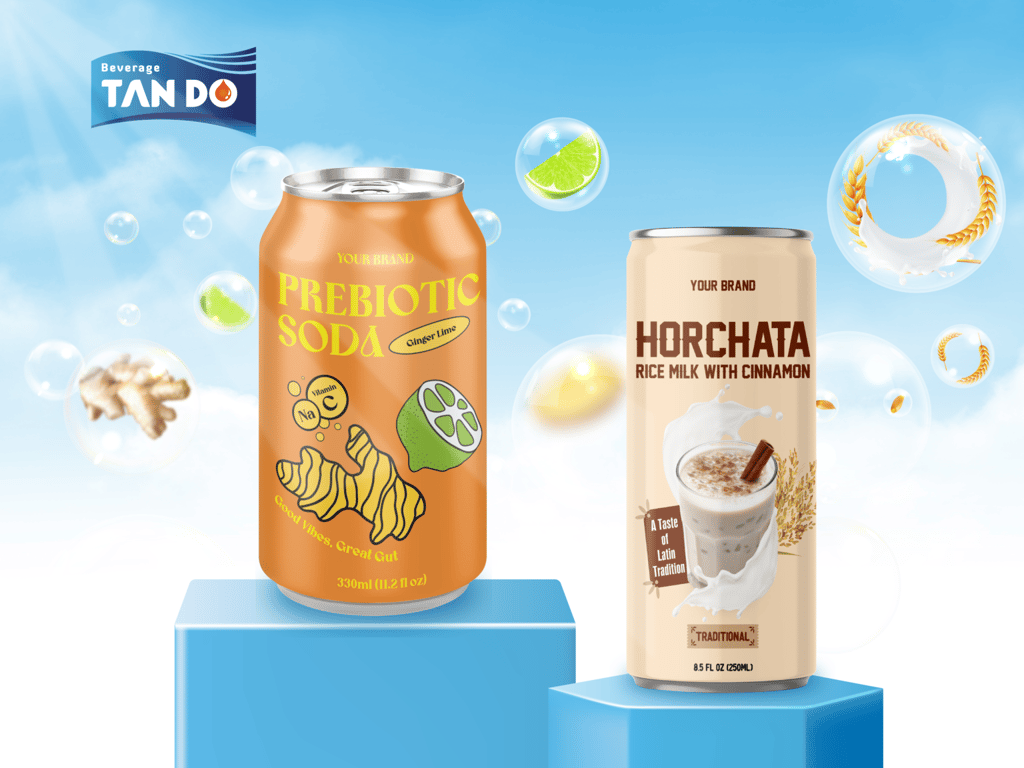
Tan Do Beverage's debut of prebiotic soda and horchata at SFFS 2025 exemplifies health-focused innovation, blending probiotics with traditional flavors for gut health. WANA Beverage's participation in CIIE 2025 highlights natural, Vietnamese-sourced drinks gaining international traction.
Local leaders like Sting and C2 dominate energy and RTD tea, with 58% and 62% market shares, respectively, through affordable, functional offerings. These cases demonstrate successful adaptation to trends like zero-sugar and localization.
Future Projections: Towards a Healthier Horizon
Looking ahead, Vietnam's beverage market is set for continued expansion, reaching USD 15.51 billion in 2024's broader scope but focusing on functional growth to USD 958.0 million by 2033. Non-alcoholic segments will drive this, with a 4.70% CAGR through 2034, emphasizing hybrid and holistic products. Projections highlight sustained demand for gut health, adaptogens, and protein-infused drinks, with global trends like functional recovery influencing local innovations.
Strategies include AI for formulation, sustainable sourcing, and targeting Gen Z with shoppertainment.
In conclusion, Vietnam's beverage market in 2025 is evolving with new tastes and robust projections, offering bold avenues for growth. Innovate with BDP+Partners for market leadership - contact us for tailored solutions.